
Frequently Asked Questions For Parents
While the topic of guns brings much concern and debate, some parents choose to shield their children from discussions about guns even when the focus of the discussion is on gun safety. When children are growing and learning in their early years, they learn important information and very specific rules to keep them safe from a variety of hazards such as crossing the street, poisons, fire, electricity and swimming pools.
It is a parent’s hope that a child will be able to avoid injury and possible death if a dangerous situation presents itself by remembering and utilizing key safety principles and rules. For instance, although a family may not actually own a swimming pool, parents may want their children to learn about the dangers of being around swimming pools and other bodies of deep water.
Likewise, although a child’s home may not have a gun on the premises, the child could be exposed to a potentially life-threatening situation involving a gun at a friend’s house, in the home of a relative or at another location in the community. Therefore, it is our recommendation that children should at least be knowledgeable of these three points:
- What to do and what not to do if they find a gun
- What to do if they are visiting at a friend’s or relative’s home and another child either has a gun or talks about showing a gun
- Possible consequences that could result from not following gun safety rules
Remember, children are naturally curious and inquisitive. The power and lethality of a gun can be demonstrated by shooting a jug of water or a melon. This type of demonstration can not only remove the mystique of firearms, but can also reinforce knowledge of the dangers of improperly handling a gun.
The decision to purchase a gun for protection is understandable from a self-defense point-of-view. However, you should know that a loaded gun in your home is more likely to be involved in an unintentional shooting that injures a loved one than to be used to stop an intruder, according to available statistics.
A possible alternative to purchasing a gun is to consult with a security specialist to explore ways to enhance the security of your home without keeping a loaded gun on the premises.
While both the American Academy of Pediatrics and the American Medical Association have concluded that the best way for gun owners to reduce the risk of gun-related injury and death in the home is to store guns unloaded and locked away, the gun owner who decides to keep his or her gun loaded for protection will need to consider other safe storage options. Please see “Informational Resources” - “Safe Storage Options for Loaded Guns.”
Over the course of their development, it is normal for children to grow not only in their physical size, but also in their overall knowledge and awareness. They are naturally curious and like to explore their environments.
There have been cases in which gun owners who kept guns in their homes believed that their children were not aware that a gun was on the premises. However, some of these parents were surprised to find out that a child in their home not only knew where the gun was kept, but had either touched it or picked it up on one or more occasions.
Any unsecured gun poses an unsafe situation involving avoidable risks. In addition to physical health risks, an unsecured gun also creates an unfortunate situation if it can be discovered and stolen during a break-in.
Simply hiding a gun, keeping it out of reach or not telling your children that there is a gun in the home are not reliable safety measures as they all are potentially dangerous situations that involve the unnecessary risk of a gun-related injury or death. Depending on the situation and the factors involved, a parent may be held liable for the gun-related injury or death of a child.
See “Informational Resources” – Safe Storage Options for storing loaded and unloaded guns for additional information.
Some parents have taken the risk of keeping a loaded gun in their home without taking precautionary measures to make the gun inaccessible to children and have experienced a tragic death in which their young child either shot and killed himself or shot and killed a sibling or another child.
Please see “Informational Resources” - “Safe Storage Options For Loaded Guns” for specific recommendations.
The ability of very young children to fire guns has often been underestimated both by parents and professionals. In one study involving over 550 children between three and 10 years of age, the authors concluded “Young children are strong enough to fire many handguns now in circulation.” The study examined the trigger-pull strength of the children along with data on the trigger-pull settings of over 60 handguns. While 25 percent of the three to four year olds were reported to have a two-finger trigger-pull strength of 10 pounds or more, a trigger-pull strength of no more than 5 pounds was required for over 60% of the guns. In one incident, a four-year old girl was reported to have pulled the trigger of the .38 caliber revolver that was involved in the shooting death of her six-year old brother.
If you are concerned about your child being at another home that may pose a safety hazard as a result of an unsecured gun, it is best to express your concern directly to the homeowner in open and honest communication. This may allow an opportunity for you to share important information about safe storage options.
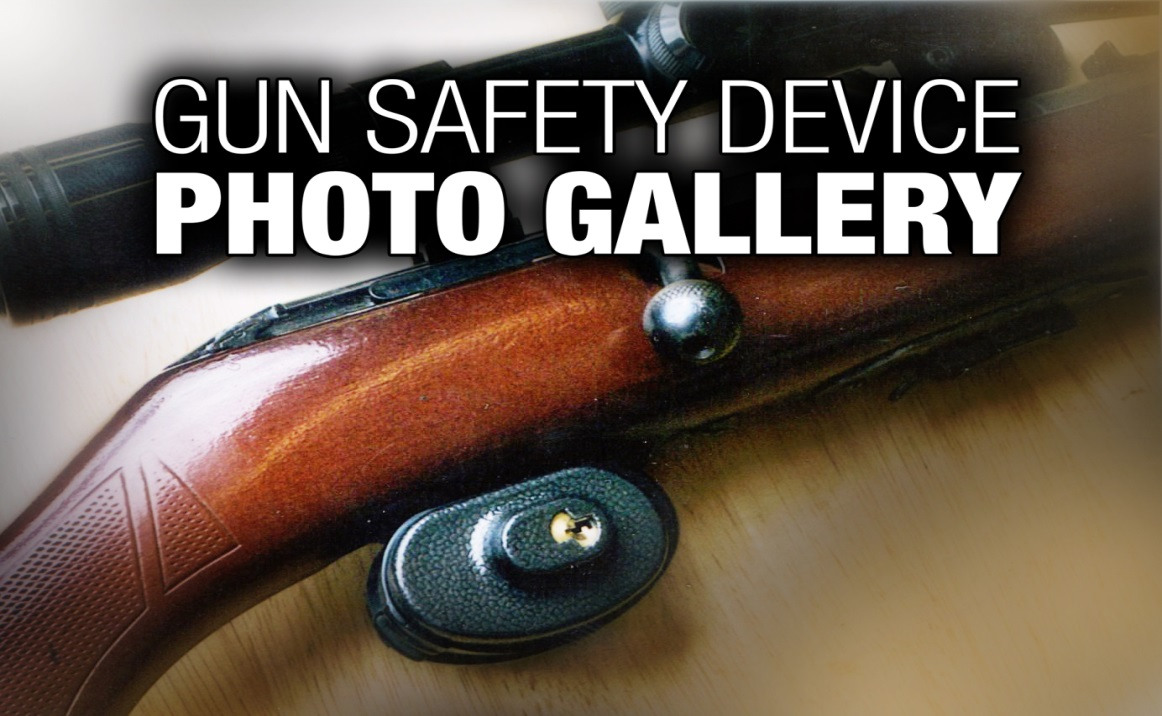
Free Trigger Locks
The Marion County Public Health Department is offering free trigger locks to Marion County residents on a one-per-family basis. The locks are available at several Indianapolis distribution sites. Each distribution site has free and convenient parking available.